How to Prep Your Home for Professional Interior Painting: A Homeowner’s Checklist
Every freshly painted wall tells a story. But behind every flawless finish is a homeowner who took preparation seriously. There’s excitement in watching a room transform—but the path between “before” and “after” can feel overwhelming if you don’t know where to start.
At IAHM Painting, we’ve helped thousands of homeowners create beautiful spaces through careful planning, communication, and attention to detail. Here’s a practical, step-by-step guide to help you prep your home for a smooth, successful interior painting project—whether it’s trim and molding painting near you, accent walls, or a whole-house refresh.
Why Prep Matters 🖌️
Imagine baking a cake without greasing the pan. Even the best recipe can fail without the right prep. The same is true for painting. Preparation protects your belongings, ensures a smooth finish, and helps the paint last longer.
Why it’s worth your time:
- Protects furniture and flooring from drips, dust, and damage.
- Improves paint adhesion, reducing cracks and peeling.
- Saves time and money by avoiding costly mistakes.
- Ensures your vision is realized—nothing spoils a new color faster than missed details or paint splatters.
Pro tip: The best painting results come from thorough prep. Rushing this step can mean more work later.
Declutter and Protect Furniture
Clearing the space is step one. Think of it as setting the stage so the painting crew can focus on what matters—your walls and trim.
Checklist:
- Remove small furniture, lamps, art, and decor from the room.
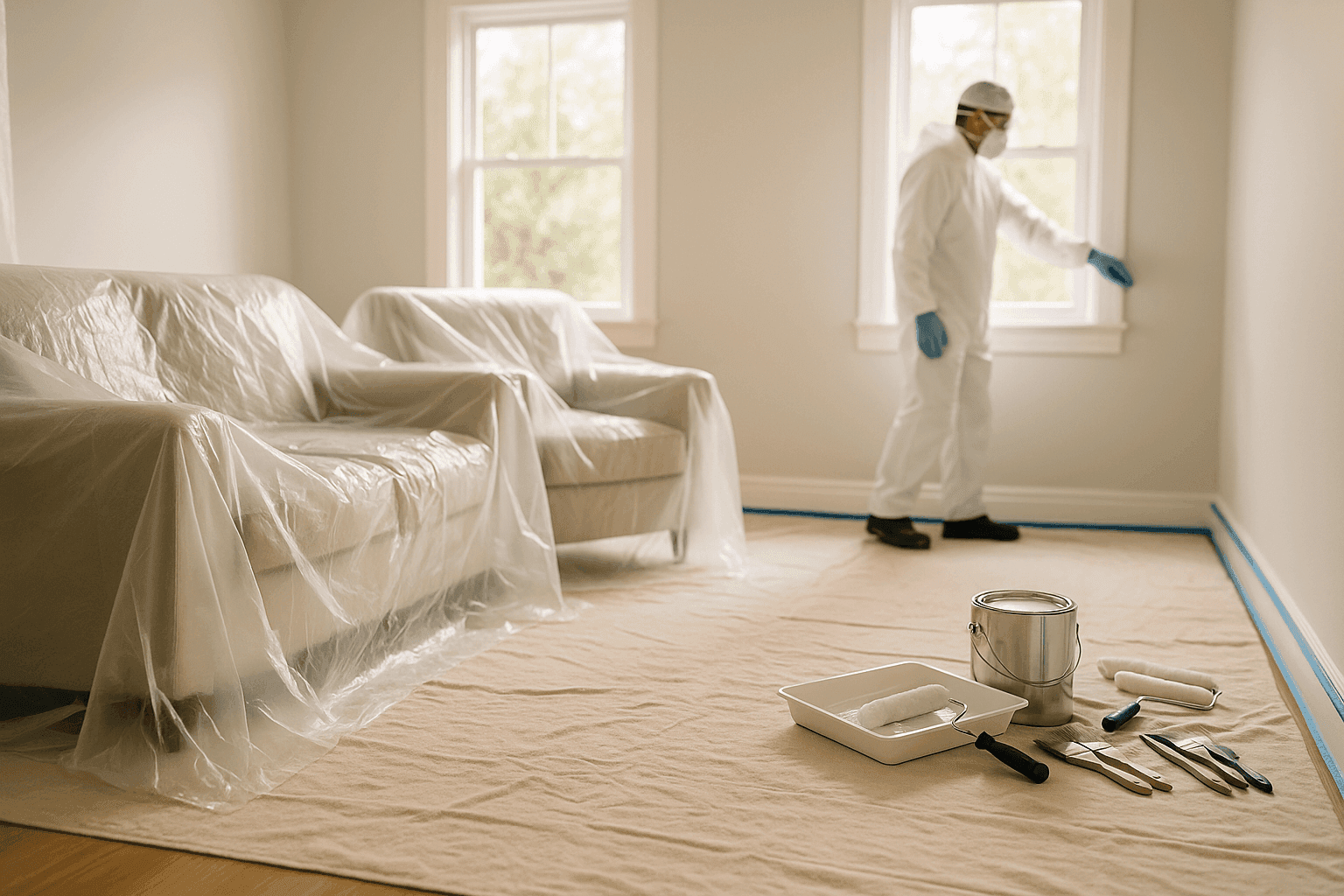
- Move large pieces (sofas, beds, dressers) to the center and cover with clean drop cloths or plastic sheeting.
- Take down curtains, blinds, and hardware.
- Remove or cover electronics.
- Take pictures off walls and store safely.
Why this matters: Even a stray paint droplet can be hard to remove from upholstery or electronics. Give your belongings a safe “timeout” while the magic happens.
Pro tip: Label hardware and store it in zip-top bags so reinstalling is easy.
Surface Cleaning and Small Repairs
A flawless paint job starts with clean, smooth surfaces. Dust, grime, and old nail holes are the hidden enemies of a durable finish.
Checklist:
- Dust baseboards, moldings, and window sills with a microfiber cloth.
- Wipe walls with a damp sponge and mild soap, especially in kitchens and bathrooms where grease can linger.
- Patch holes or cracks with spackle; let dry, then sand smooth.
- Repair damaged drywall as needed.
- Make sure surfaces are dry before painting begins.
Why this matters: Paint sticks best to clean, solid surfaces. Skipping this step can lead to uneven coverage or peeling.
Reference: The Painting and Decorating Contractors of America (PDCA) highlights surface preparation as the #1 factor in professional results.
Taping and Masking Tips
Taping is like drawing the outlines before coloring in a masterpiece. It’s about precision, not shortcuts.
Checklist:
- Use quality painter’s tape (not masking tape) for crisp lines.
- Apply tape to baseboards, trim, door frames, and window surrounds.
- Press tape edges firmly to prevent bleeding.
- Remove switch plates and outlet covers (place screws in labeled bags).
- Cover floors with rosin paper or drop cloths.
Common pitfalls: Taping in a hurry leads to fuzzy lines and touch-ups. Take your time here—the difference is visible.
Pro tip: Remove tape while the paint is still slightly damp to avoid peeling.
Managing Pets and Kids 🐾
Fresh paint and curious paws don’t mix. Kids and pets can unknowingly wander into wet paint or freshly prepped areas.
Checklist:
- Arrange for pets to stay in another part of the house or with a trusted friend.
- Keep kids occupied and out of the work area.
- Block off access to painting zones with baby gates or closed doors.
- Let everyone know the project schedule.
Why this matters: Safety comes first. Paint fumes and tools should be kept away from little hands and paws.
Reference: The American Academy of Pediatrics recommends keeping children and pets away from freshly painted rooms until fully dry.
What to Expect on Painting Day
The day arrives. The crew pulls up, tools in hand. What now?
Here’s what usually happens:
- A project lead will walk through the space with you, confirming details and colors.
- Final surface prep and protection are checked.
- Painting begins—priming where needed, then applying the chosen paint.
- The team keeps the work area tidy and ventilated.
- At day’s end, a walkthrough ensures you’re happy with progress and no concerns are missed.
Pro tip: Stay available for questions, but give the crew space to work efficiently.
Communication is key. Don’t hesitate to speak up if something doesn’t look right or you have a last-minute question about trim and molding painting near you.
Quick Safety Checklist
Before painting starts, a quick safety review is essential.
- Confirm paint types (especially if opting for eco-friendly or low-VOC options).
- Make sure proper ventilation is available—open windows, use fans.
- Remove flammable items (candles, aerosol cans) from the room.
- If lead paint is suspected (in older homes), consult EPA guidelines for safe removal.
- Ensure ladders and tools are stored safely when not in use.
Reference: Follow OSHA guidelines for safe painting practices indoors.
DIY vs. Call a Pro
Some painting tasks are simple. Others need a steady hand and specialized tools.
DIY is doable for:
- Small accent walls
- Minor touch-ups
- Painting furniture or cabinets (with prep)
Call IAHM Painting for:
- High ceilings or stairwells
- Trim and molding painting near you
- Surface repairs (drywall, stucco, textured finishes)
- Lead paint removal
- Larger projects or specialty coatings
Why hire a pro? Professionals bring experience, speed, and the right tools for everything from surface preparation to spray painting, ensuring a finish that lasts.
What Pros Do On Arrival
A professional crew does more than just show up and start rolling paint.
Here’s what to expect:
- Confirm project scope and color choices with you.
- Set up protective coverings on floors and furniture.
- Address last-minute surface prep needs.
- Review safety and ventilation.
- Communicate timelines and answer any questions.
- Keep work areas organized and respectful of your home.
Pro tip: A reputable team values your input and keeps you informed every step of the way.
Prevention & Maintenance
Protect your investment with ongoing care.
Checklist:
- Wait until paint is fully dry before moving furniture back.
- Clean painted surfaces gently with mild soap and water.
- Touch up nicks or scuffs promptly to prevent peeling.
- Schedule regular power washing for exteriors and decks.
Why this matters: Regular care keeps your home looking fresh and extends the life of your paint.
Costs & Time Factors
Every project is unique, but some factors influence time and cost more than others.
What affects the price:
- Size of the room or home
- Number of colors and specialty finishes
- Extent of prep (patching, cleaning, drywall repair)
- Type of paint (eco-friendly, epoxy, specialty coatings)
- Furniture moving and protection needs
Typical timeline: One to several days, depending on complexity and drying times.
Pro tip: Ask for a detailed estimate and timeline before work begins, so there are no surprises.
When It’s an Emergency
Some painting issues can’t wait.
Urgent scenarios:
- Water damage or mold on interior walls
- Peeling or bubbling paint revealing structural issues
- Lead paint hazards in homes built before 1978
If you notice these, stop and consult a professional right away. Safety comes before aesthetics.
FAQ
How long does it take for paint to dry?
Most latex paints dry to the touch in a few hours, but curing can take 1–2 weeks. Oil-based paints may require longer.
Do I need to move out during painting?
Not usually. Most projects can be done with you at home—just avoid the work area and keep it ventilated.
Can I choose eco-friendly paint options?
Absolutely. IAHM Painting offers low-VOC and zero-VOC paints for healthier indoor air.
What about lead paint?
If your home was built before 1978, ask your painting team about lead testing and safe removal. Consult EPA resources for guidelines.
Local/Seasonal Considerations 🌦️
Humidity and temperature can impact paint drying times and surface prep.
- In humid seasons, allow extra drying time between coats.
- In dry conditions, watch for dust and static.
- Always ventilate well, no matter the season.
Pro tip: Schedule painting during mild weather for best results—extreme cold or heat can affect paint performance.
Preparing your home for professional painting isn’t just about protecting floors and moving furniture. It’s about setting the stage for a transformation you’ll love for years. A little planning goes a long way. For surface preparation, trim and molding painting near you, and every detail in between, IAHM Painting is here to help.
Call IAHM Painting now — or reach us anytime at 877-759-1287 .